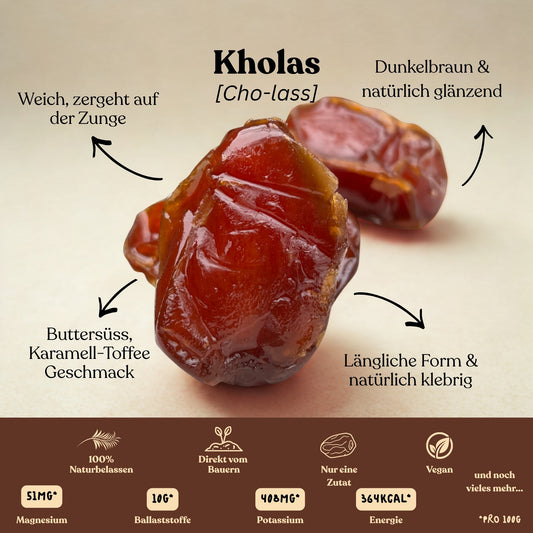
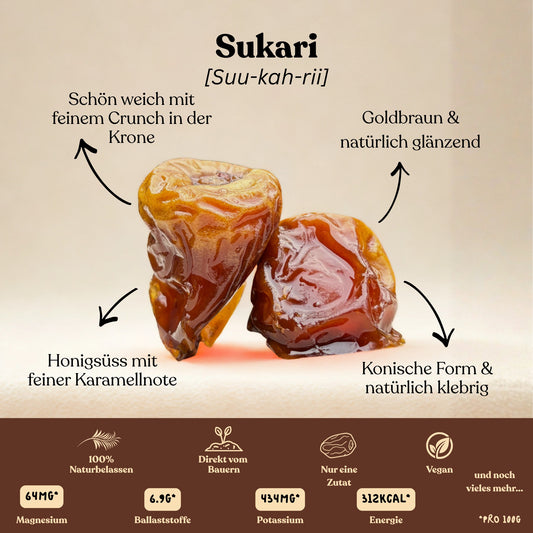
Discover pressed dates from our partner farm in Al-Ghat, Saudi Arabia. Gentle pressing creates a compact, soft and naturally syrupy texture without added sugar, oil or external syrup. Compare the styles here or explore our full date collection and dried dates. Shipped directly from Switzerland.

  • Grown in Permaculture

    Good for the land, good for us.


    By working with nature instead of against it, the farm keeps the soil healthy, focuses on biodiversity & grows our dates without pesticides.

  • Finger painted hand symbol with outline of heart in the middle of palm

    Hand-harvested

    Picked by real people, not machines.


    Our dates are harvested by hand, allowing each fruit to be picked at the right time by farmers who know the palms.

  • Family Visit = Farm Visit

    Home means the palms, too.


    Maan, the co-founder of dattelmond, visits the farm whenever he visits his family in Saudi Arabia. It means staying connected to the people who grow our dates & seeing for ourselves what’s happening on the farm.

1 of 3

What makes pressed dates different?

Pressed dates are kept whole and gently compressed together after ripening. Their own natural moisture and syrup help form a soft, sticky block that is easy to portion, enjoy as a snack or use in recipes. The surface may look glossy, and the texture can change with the temperature and from one harvest to the next. These natural differences do not indicate added ingredients.

Collapsible content

Gepresste Kholas Datteln in einer Schale mit Verpackung und arabischem Kaffee

Why are dates pressed?

Pressing dates is a traditional way of naturally preserving dates while keeping them raw. This was especially useful for Bedouins (Arabian Nomads) travelling through the desert, as the dates could be stored and carried for longer than fresh dates without being cooked or processed.

Pressing also makes the dates more compact and helps distribute their own syrup around the fruit, which naturally protects them and helps them keep.

Not every variety is equally suited to this method. Sukari and Kholas have the right balance of moisture, soft flesh and skin texture for pressing, while varieties such as Medjool are usually better enjoyed unpressed.

How do I choose between pressed dates?

Choose according to sweetness, flavour and texture. Some pressed dates are intensely sweet and honeyed, while others are softer and more mellow with caramel-like notes. The product pages describe each option in detail. For blending and baking, a very soft texture is especially convenient; for eating with coffee or tea, the flavour profile may be the deciding factor.

faq

Do pressed dates contain added sugar?

No. Their sweetness comes entirely from the fruit. Pressed dates may release some of their own natural syrup, but we do not add sugar, glucose syrup, oil, preservatives or flavourings. The exact ingredients are listed on each product page.

Are pressed dates pitted?

No. Our pressed dates are sold whole with their pits unless a product page explicitly states otherwise. Open each date and remove the pit before eating, blending or baking.

How should pressed dates be stored?

Keep them in a cool, dry and dark place and close the packaging well after opening. An airtight container helps protect their texture and aroma. Refrigeration is optional and gives a firmer texture; let chilled dates return to room temperature if you prefer them softer.

Why is there syrup around the dates?

The syrup comes naturally from the dates themselves as they ripen and are pressed. The amount can vary between harvests and packs. It is not an added syrup and is part of the characteristic soft, sticky texture.

Can pressed dates be used for baking?

Yes. After removing the pits, they can be chopped, mashed or blended into cakes, biscuits, fillings and other recipes. Their compact texture also makes them easy to portion. Add a little warm water when blending if a smoother paste is needed.