Dried Dates
Whole dried dates in different varieties, each with its own flavour and texture. Naturally sweet, with nothing added.
-
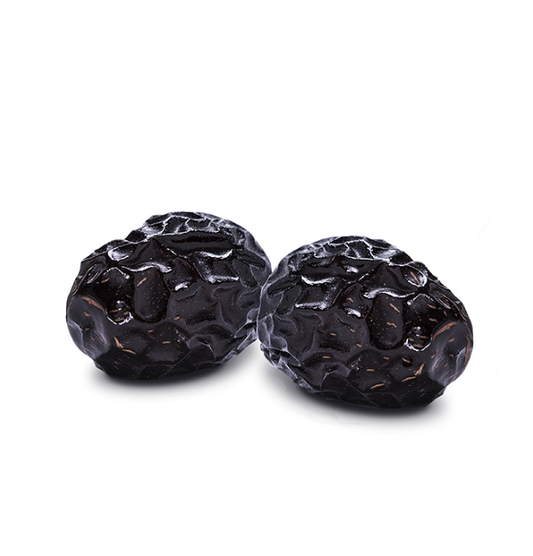
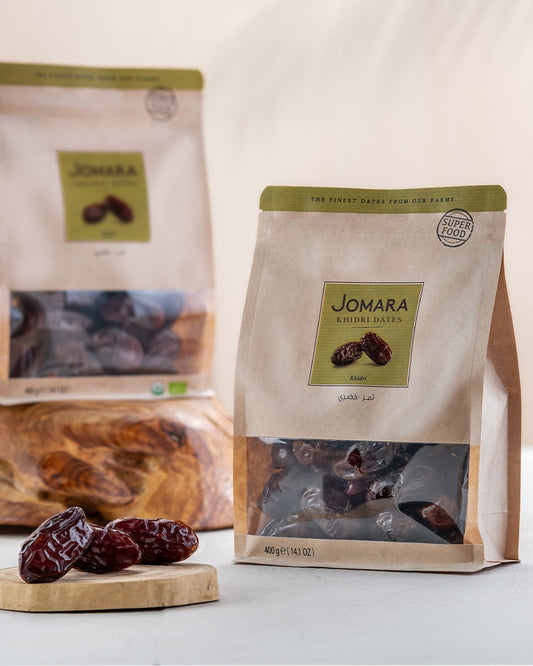
Khidri Dates
Cocoa-like & chewy7 reviewsRegular price CHF 13.90Regular priceUnit price CHF 34.75 / per kgSale price CHF 13.90 -
Sold outAjwa Dates
Earthy & mild19 reviewsRegular price CHF 18.50Regular priceUnit price CHF 46.25 / per kgSale price CHF 18.50Sold out -
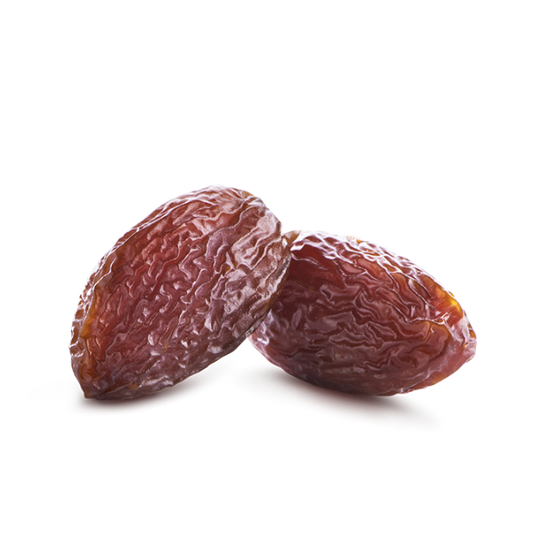
Sold outMedjool Dates
Caramel sweet & juicy7 reviewsRegular price CHF 16.90Regular priceUnit price CHF 56.33 / per kgSale price CHF 16.90Sold out
-
Grown in Permaculture
Good for the land, good for us.
By working with nature instead of against it, the farm keeps the soil healthy, focuses on biodiversity & grows our dates without pesticides. -
Hand-harvested
Picked by real people, not machines.
Our dates are harvested by hand, allowing each fruit to be picked at the right time by farmers who know the palms. -
Family Visit = Farm Visit
Home means the palms, too.
Maan, the co-founder of dattelmond, visits the farm whenever he visits his family in Saudi Arabia. It means staying connected to the people who grow our dates & seeing for ourselves what’s happening on the farm.
What are dried dates?
Most dried dates are what is known as Tamr: the fully ripened stage of the date.
This is the stage most people are already familiar with. Medjool and Deglet Nour dates, for example, are usually sold as Tamr dates.
By this point, the fruit has naturally lost more of its moisture and become more stable, which is why it can be stored and enjoyed well beyond the short harvest season. Depending on the variety, Tamr dates can still be soft, or they can be firmer and chewier.
They are not necessarily dried in the way you might imagine raisins or other dried fruit being dried. In many cases, they have simply reached their natural final stage of ripeness.
Collapsible content
What do names like Ajwa, Medjool and Khidri mean?
Ajwa, Medjool and Khidri are simply different varieties of dates.
It is a bit like apples: Gala, Braeburn, Boskoop and Granny Smith are all apples, but each one tastes and feels different. Dates work the same way.
Every variety has its own size, colour, texture and flavour. Medjool, for example, is large and soft, Ajwa is smaller with a deeper, earthy flavour, and Khidri is firmer and chewier.
Once you start trying different varieties, you quickly realise just how different dates can taste from one another.
Which date variety should I choose?
It mostly comes down to what kind of texture and flavour you enjoy.
Medjool is a good place to start if you like a large, soft and fleshy date with a rich sweetness.
Ajwa is smaller and has a more distinctive, earthy flavour. It is also the variety traditionally associated with Medina and is especially well known in Muslim communities.
Khidri is firmer and chewier, with a warm caramel-like sweetness. It is a nice choice if you prefer a date with a little more bite.
There is no “best” variety. They are genuinely different fruits, so it is worth trying a few and seeing which one you naturally reach for again.
faq
Do dried dates contain added sugar?
No. The sweetness in our dried dates comes entirely from the fruit itself. There is no added sugar, glucose syrup or oil. The only ingredient is dates.
Dates naturally become very sweet as they ripen because the sugars already present in the fruit become more concentrated as the fruit loses its moisture content during the ripening process.
Why are some dried dates soft and others chewy?
That mostly comes down to the variety.
Different date varieties naturally retain different amounts of moisture when fully ripe. That is why a Medjool can be very soft and fleshy while a Khidri is noticeably firmer and chewier, even though both are fully ripened dates.
It does not mean that one is fresher or better than the other. That difference in texture is simply part of the variety.
How should I store dried dates?
Dried dates are best stored in the refrigerator, but can also be stored at room temperature.
For longer storage, you can also keep dates in the freezer. They may become a little firmer when frozen, so we usually let them sit at room temperature for 5-10 minutes before eating them.
Always check the best-before date on the package for the exact shelf life.
Are dates good during pregnancy?
Yes. Dates are great during pregnancy, and studies have shown that eating them regularly in the final weeks before birth may help support a smoother labour.
We’ve also heard the same thing personally from mothers close to us who ate dates in the weeks leading up to birth: they had a positive experience with it and told us they would intentionally do it again.
A good friend of ours, who is also a midwife, wrote a detailed article for us about dates as part of birth preparation and what the research actually says. You can read her article here: Dates for birth preparation: does it really work?
We also have a broader guide about dates during pregnancy.
Do dates have pits?
Yes. Our dried dates are whole dates and contain their natural pit unless the product page specifically says otherwise.
Remove the pit before eating them or using them in a recipe.